
Melanie, a treatment coordinator at Beth’s Place, knows that recovery is about more than just treatment. Beth’s Place provides outpatient substance use and mental health resources, helping clients not only with recovery but also with housing, employment, and life skills by equipping them for success long after they leave the program.
Melanie often brings clients to A Place for Hope, a partner of Great Plains Food Bank in Moorhead, to pick up food and essential resources. “We try to make sure they have food first, usually a prepackaged emergency box,” she explained. Then, the next step is teaching clients to navigate the pantry themselves. “By the time they graduate from our program, we want them to be as independent as possible. These are just the stepping stones they need.”
With most of her clients—over 95%—relying on SNAP benefits, Melanie has felt the impact of the government shutdown. “It’s been very difficult,” she said. “We work across North Dakota, and we have clients in multiple counties. We stay very aware of resources, from emergency food pantries to holiday meal programs, and make sure our clients can access them.”
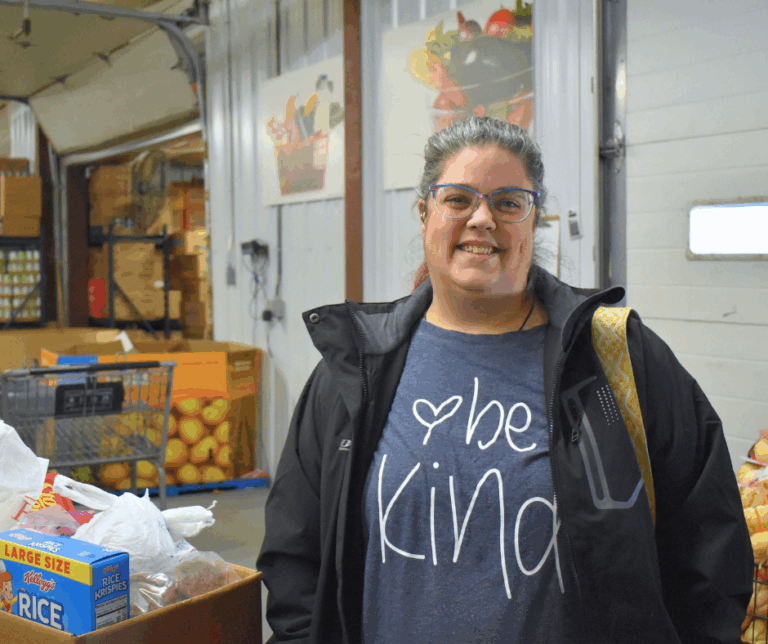
“If they’re worried about being hungry or getting their families fed, they can’t focus on recovery and improving their lives,” Melanie shares. Having access to community food resources allows Melanie’s clients to focus on their recovery without the stress of worrying about their next meal.
Melanie also emphasized how easy it is to work with the food pantry system. “They’ve expanded their hours, which is wonderful. I can just call and give them the information and they put us on their calendar. It’s very easy to use, which makes my job easier and allows me to focus on supporting our clients.”
For Melanie, the impact is clear: resources like these provide stability, dignity, and a sense of community for people working to rebuild their lives. “Some of the places I’ve worked in the past didn’t have anything like this. We’re very lucky to have these resources available.”